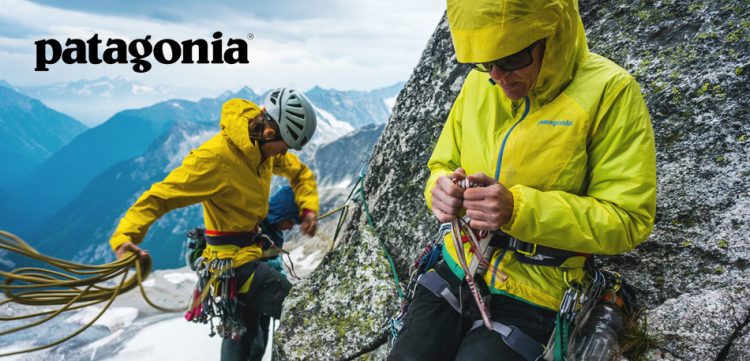
Patagonia is one of the most used outdoor clothing brands not only in Australia but around the world. Patagonia, founded in 1973 by Yvon Chouinard has brought the company from a small start up business focusing on rock climbing equipment to million dollar company selling not only outdoor equipment but also selling it’s own craft beer!!! (1) Such drive and motivation by the company has allowed it to compete against it’s much larger competitors such as north face and Kathmandu. (1) How have they done so you may ask? or even better how could a small brand selling outdoor equipment manage to produce it’s own craft beer??
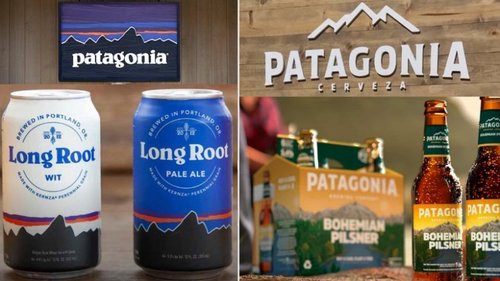
Well to figure that out you need to look at the company’s long standing environmental advocacy which has enabled them to become a benchmark for their eco-friendly products. Thus, in doing so, Patagonia has created a long standing vision, not only to their company’s goals and mission statement but has also created the perception within their customers minds as they know that they will get an eco friendly product all the time no matter the place or circumstance whilst using vibrant colours to demonstrate this as they use recycled nylon and other recycled fabrics to create their products.
How Patagonia has used vision within sensory marketing to create an effective and efficient company and product perception?
In this day and age of products and how companies undertake their production process, there is a large focus on them to be environmentally sustainable as they have a job to preserve the environment for this generation and future generations. So when customers shop or look for products they generally look for companies with a good geo footprint or one that has a high environmentally friendly rating. As shown Patagonia has successfully done this is through sensory marketing referring to focusing and engaging on the customers senses of vision to influence their perception and judgement.
Patagonia straight away create this perception by appealing to their niche market through the mountains and carefully planned choice of colours within their logo. So, as Patagonia has been marketed for over 30 years it’s easy to see why they have this perception of an eco-friendly outdoor brand as their colour choice over the mountains replicates that of the different colours of the sky you see (light blue, orange, dark blue and purple) whilst exploring the outdoors, giving the customers a vision of a vintage vibe, giving a sense of a chilled and peace vibe contrasted with orange encourages customers to go out and explore the peaceful nature of the outdoors.
Thus, it gives out subconscious triggers which appeals to their consumers senses which efficiently engages it’s consumers (Krishna 2012). It also senses to customers that because of this they also would be environmentally sustainable because of the care they have for the outdoors. So I guess it’s easy to say why would a company that mainly relies on the outdoors want to destroy the outdoors?

So through vision, Patagonia have used a song personal selection known as perceptual vigilance which refers to customers becoming more aware of Patagonia’s product when they need it. For example, if an individual is going on a hike to Mount Everest, they become more aware of Patagonia because it suits and caters for there current needs. Thus, Patagonia has done this to attract and attain customer not only for the short term but also for the long term.
This Is evident within myself as I recently went on a trek to Mount Everest and only became aware of Patagonia because it catered for my trekking needs, as I needed warm but assurable clothes that would suit me for all conditions I faced such as rain, snow, wind etc. Hence, it creates perception by appealing to our senses of colour as stated above is done through the logo, which then creates a vision through perceptual vigilance that Patagonia are the business you want to go to when going to explore the outdoors. Which creates the perception that Patagonia are a leading environmentally sustainable company, who’s products are durable and ‘trendy’ in which care for the outdoors.
For example, (Singh, 2006) study argues that “consumer behaviour and brand perception are largely influenced by colours” and found “that the colours affect not only the person, but also the relationship”. Thus sensory marketing evokes the emotions affecting consumers perceptions of the product or brand. As a result both Singh (2006) and Krishna (2012) highlights the benefits of “using sensory marketing for building brand value, including ensuring loyalty of standing customers as well as gaining new ones, building a successful brand and positive perception of the brand and product by users”.
In addition I can say it has been a successful approach because as for myself their hiking and trekking gear kept me warm and dry, whilst also not being damaged so I can use it for other hikes and trikes thus they have gained a long lasting customer within myself and if it has done that to me others will also have the same experience, thus proving to be effective and efficient. Therefore, by looking at the study and my own experience it is evident that Patagonia’s brand perception is the driving force one why they have become so successful.
(1) Nast, C 2019. This Is the Outdoor Brand Fashion Insiders Can’t Get Enough Of. GQ. Visited 3 Apr. 2019 https://www.gq.com/story/patagonia-labels-on-fire
(2) Saad, M 2019. ‘Patagonia: A Focus on a Sustainable Model – Technology and Operations Management. Rctom.hbs.org. Visited 3 Apr. 2019, https://rctom.hbs.org/submission/patagonia-a-focus-on-a-sustainable-model/
(3) Krishna, A., 2012. ‘An integrative review of sensory marketing: Engaging the senses to affect perception, judgment and behavior’. Journal of consumer psychology, 22(3), pp.332-351. http://neuromarkewiki.com/images/1/13/An_integrative_krishna_2012.pdf
(4) Nadanyiova, M., Kliestikova, J. and Kolencik, J., 2018. Sensory Marketing from the Perspective of a Support Tool for Building Brand Value. Economics and Culture, 15(1), pp.96-104. https://content.sciendo.com/view/journals/jec/15/1/article-p96.xml
(5) Singh, S 2006 . ‘Impact of Color on M arketing. In Management: Decision’, (44), 783 – 789.


