How Patagonia Walks the talk

Say you walk into a supermarket and you are considering which brand of chocolate you should buy either Lindt or Cadbury. You consider to yourself Lindt chocolate is more expensive then Cadbury so Cadbury is probably better because I save money although last time I ate Cadbury it didn’t satisfy my expectations whereas even though Lindt chocolate is more expensive it exceeded my expectations you go for the Lindt option because of the positive experience you have had with Lindt. Now even though this thought process sounds simple it is actually very complex in nature as marketers must market towards consumer learning in order for consumer to understand their product and wanting to purchase it over competitors. To do so, we need to look at consumer learning which is “a process by which individuals acquire the purchase and consumption knowledge and experience that they apply to future related behaviour.” (1)

When looking at consumer learning it is essential that marketers understand different types of learning theories in order to evoke emotions from their product to instil this in their consumer in order to gain a loyal long standing relationship with their consumer. In doing so marketers can look at 2 different learning theories (2)

1. Behavioural: Which “Assume that Learning Takes Place as the Result of Responses to External Events. Also known as stimulus response theory.” (1)

2. Classical: Which “occurs when a a stimulus is paired with another stimulus that elicits a known response that serves to produce the same response when used alone.” (1)

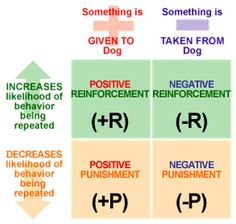
In addition within the behavioural learning theory instrumental conditioning is undertaken which “Occurs as the Individual Learns to Perform Behaviours That Produce Positive Outcomes and to Avoid Those That Yield Negative Outcomes.” Thus, when creating an emotional connection between your Brand and your customer positive reinforcement is a vital component. This is where “A positive outcome that influences the likelihood that a specific behavior will be repeated in the future in response to a particular cue or stimulus.” (1, 2)
In this instance of Patagonia, one of the leading companies in producing outdoor gear, they evidently show through the ad below how they have utilised their instrumental conditioning to a max by providing consumers with positive outcomes. For example, as can be seen with Keith Malloy the surfer in the video he states the new surfboards he purchase usually only last a couple of months, but with the Patagonia surfboard he has purchased it has lasted him for over 9 years and “doesn’t have one single ding in it” and further explains how he has taken the surfboard to some of the most dangerous surfs in the world and it still in mint condition.

Thus, it yields a positive outcome towards consumers, showing how Patagonia use the behavioural theory approach as their consumers learning takes place as a result to external events. This external event being word of mouth of the ad shown above. This is because Patagonia’s clothes are durable, sustainable, environmentally friendly as they recycle and reuse certain materials in their clothes which allows them to last numerous years, allows a consumer to know what they will get with their product and because other consumers such as their friend’s or family have had positive experiences it yield’s positive outcomes because a consumer will then purchase Patagonia over a rival’s such as north face because of the positive experiences instilled to them by trusted others. Therefore, allowing for behavioural learning to take place and building a long standing trust and relationship with consumers.

Reference:

(1) Solomon, Michael., Russell-Bennett, R. and Previte, J 2019, Consumer Behaviour, Australian Edition, 4th Ed, Pearson

(2) Hoch, S.J. and Ha, Y.W., 1986. Consumer learning: Advertising and the ambiguity of product experience. Journal of consumer research13(2), pp.221-233. Viewed 9th May 2019, https://www.researchgate.net/publication/24098465_Consumer_Learning_and_the_Ambiguity_of_Product_Experience

How Patagonia uses the most successful marketing tool to their advantage

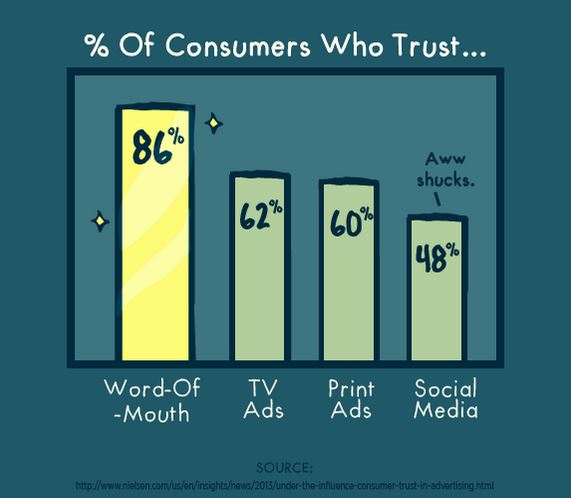
How do small companies become big companies? I guess to answer that question you have to look at the companies marketing strategies and how consumers receive information about the companies products and services. By doing so, you can see that companies can either look into investing a large sum of money into traditional marketing strategies such as tv or email’s or instead a company can invest and ensure that they have develop an effective word of mouth channel which is also known as the most efficient and cost effective marketing strategy (Misner 1999; Trusov, Bucklin, and Pauwels 2009). Solomon, Russell-Bennet, and Previte, (2018) States that word of mouth is where the Product information is transmitted by individuals to individuals because people tend to trust what their friends and family or social group have to say about products and whether it was a beneficial and good purchase for them .

So ask yourself this, have you ever purchased a product or switched services such as a phone provider because your best friend or parents have made amazing comments about the product? Or on the other hand have they made negative comments which made you not purchase a product? if so, think about how it made you purchase or not purchase the product and if it influenced your decision and if so imagine how many other it has influenced as well. But despite this, it can also work against a company as negative word of mouth can have a negative effect from other people and these comments weigh more heavily than they do positive comments (Trusov, Bucklin, and Pauwels 2009).

Instead of spending big bucks on traditional media to spread the word, outdoor Patagonia relies on its own customers to administer word of mouth and is the underlying driving force on why this ecological sustainable company has grown from a small Start up company to a billion dollar company. (1) They have been able to achieve this as they believe that “Our customer is our best advocate” (1) and by “having more interactions our brand increases the rate that they become comfortable recommending us.” (1) In addition because the consumers have become more environmentally sustainable, Patagonia uses this to their advantage by telling their customers of how they recycle and reuse certain materials that last for over 5 years, in order to better the environment for this generation and future generations.

As a result, consumers positively communicate this to their friends and family as they believe they are doing something good within themselves and believe that the business is doing something sustainable and care about the environment we live in today. Therefore, “customers come to understand our product quality, they become more interested in telling their friends and family” (1). As they have the “right information to do that, because it builds their confidence to know what they’re talking about” (1). Hence, word of mouth has become the strongest form of marketing for Patagonia which is what can explain they large success.

For example, a study shows that conducted by Nail (2005) found that “40% fewer people agree that advertisements are a good way to learn about new products, 59% fewer people report that they buy products because of their advertise- ments, and 49% fewer people find that advertisements are entertaining”. Thus, showing that the traditional marketing methods are significantly becoming unpopular. Therefore, it also shows that Patagonia have noticed the decline in this (1) and implemented word of mouth In order to gain a competitive advantage over it’s competitors which is proven successful through the success of Patagonia.

Reference: (1) https://www.digitalcommerce360.com/2004/02/18/patagonia-polishes-off-the-magic-bullet-of-word-of-mouth-a/

(2) Trusov, M., Bucklin, R.E. and Pauwels, K., 2009. Effects of word-of-mouth versus traditional marketing: findings from an internet social networking site. Journal of marketing73(5), pp.90-102. <http://citeseerx.ist.psu.edu/viewdoc/download doi=10.1.1.622.9010&rep=rep1&type=pdf>.

(3) Misner, Ivan R. (1999), The World’s Best Known Marketing Secret: Building Your Business with Word-of-Mouth Marketing, 2d ed. Austin: Bard Press.

(4) Solomon, M, Russell-Bennet, R, & Previte, J 2018, Consumer Behaviour: Buying, Having Being, P.Ed Australia, Melbourne, ProQuest Ebook Central.

Patagonia: In the mind of consumers by appealing to their wants and needs

A consumers wants and needs is the driving motivation behind the question “why did you purchase that product? and what made you purchase the product?” it’s what makes consumers purchase a particular product in which they not only want but think they need. This is manifested within an individual through their drive which is the degree of arousal present due to a discrepancy between the consumer’s present state and some ideal state and their wants which is displayed through the need created by personal and cultural factors (Anon 2014; Fennell, 1978).

In the last decade studies have been conducted such as Nielsen’s 2014 global survey on Corporate Social Responsibility, results show that 55% of people are willing to pay extra for products from companies committed to making positive social and environmental impacts and reduce their carbon footprint (Spivey 2019). It has also shown that millennials want companies do their part in addressing issues such as health, the economy, and environmental sustainability in the way that they produce and deliver their products, which shows that this new generation drastically differs from the last as there wants and needs has shifted to caring for the world we live in today not only for the present but for the future generation also (Anon 2014, Spivey 2019).

In addition to Nielsen’s study, a more recent study conducted by Cone communications (2017) has found an increase in consumer wants and needs and choice becoming more environmentally sustainable as it found that “87% of consumers will have a more positive image of a company that supports social or environmental issues, 88% will be more loyal to a company that supports social or environmental issues, 87% would buy a product with a social and environmental benefit if given the opportunity and 92% will be more likely to trust a company that supports social or environmental issues.”

Because of this, Patagonia have positively explored this as their products are longer lasting meaning they do not need to be thrown away as they also recycle certain materials and make their product such as a jacket out of it, meaning that the material is re-used and not thrown away which results in less damage to the environment as fewer products are being dumped onto the environment or garbage landfills. Thus, Patagonia successfully do so as its customers can live in a more environmentally responsible way which has seen them, as a company, become extremely successful all over the world.

Because of this new found demand of companies being environmentally sustainable which is proven by the literature above, it is made evident that Patagonia successfully appeals to the determinant of need of the physical characteristics of the environment such as climate, whilst also appealing to the environmental context within the determinant of wants. Thus together, it satisfies the consumers needs and wants which drives Patagonia to success as they appeal to consumers to ‘buy less’, bringing about a sense of positive incentives as and self and fulfilment as the consumer knows that by purchasing Patagonia’s brand they are bettering the environment and making a positive social impact of change.

Reference:

(1) SAGE Journals. (2019). ‘Sustainable Marketing’, Ynte K. van Dam, Paul A. C. Apeldoorn, 1996. Accessed 6 May 2019 <https://journals.sagepub.com/doi/pdf/10.1177/027614679601600204&gt;.

(2) Anon, (2014). ‘The concept of green marketing and green product development on consumer buying approach’, Accessed 6 May 2019, https://www.researchgate.net/profile/Assc_Prof_Dr_Rashad_Yazdanifard/publication/268747494_THE_CONCEPT_OF_GREEN_MARKETING_AND_GREEN_PRODUCT_DEVELOPMENT_ON_CONSUMER_BUYING_APPROACH/links/547561a10cf245eb4370c673/THE-CONCEPT-OF-GREEN-MARKETING-AND-GREEN-PRODUCT-DEVELOPMENT-ON-CONSUMER-BUYING-APPROACH.pdf

(3) Spivey, S. (2019). ‘How Patagonia is using Cause Marketing to define their brand and drive sales – Bazaarvoice blog’. Accessed 6 may 2019, <http://blog.bazaarvoice.com/2015/07/07/how-patagonia-is-using-cause-marketing-to-define-their-brand-and-drive-sales/&gt;.

(4) Fennell, G., 1978. ‘Consumers’ Perceptions of the Product—Use Situation: A conceptual framework for identifying consumer wants and formulating positioning options’. Journal of Marketing42(2), pp.38-47. https://journals.sagepub.com/doi/abs/10.1177/002224297804200207?journalCode=jmxa

(5) Nielsen N.V. 2014. ‘ Doing well by doing good’, The Neilson company, New York USA and Diemen The Netherlands, https://www.nielsen.com/content/dam/nielsenglobal/jp/docs/report/2014/Nielsen%20Global%20Corporate%20Social%20Responsibility%20Report%20-%20June%202014.pdf

(6) Cone Communications, 2017, ‘Cone communications CSR study, Cone communications, Boston USA, http://www.conecomm.com/research-blog/2017-csr-study#download-the-research

Why does buying a jacket give you and the company a positive sense of prestige and worth?

Have you ever considered why people buy brand name products or why they forge hundreds or even thousands of dollars on a pair of socks or undies? Why are they so concentrated on having the most expensive stuff? isn’t just a name right like Gucci or Tommy Hilfiger? Well the answer to this relates to an individual’s or company’s self-esteem, self perception and even the personality traits of the individual and company. The type, design, material, and way clothes are produced and worn play a significant role in influencing someone’s self-esteem, self perception and personality, not only on the individual but also towards the business providing the clothes which is all due to a significant increase in consumer consumption as clothing has become more of a disposable product within the world.

Thus, because of this, our self perception and self-esteem can be dramatically changed or persuaded by our exposure to the media and marketing campaign undertaken (Mehta 1999). Another major contributor is social comparison which is where consumers evaluate themselves by comparing themselves with others (Moschis 1976 and Mehta 1999). For example, in Mehta (1999) study it found that the “purchase intent was found to be stronger for respondents whose self-image and perceived brand image are congruent”. Meaning that when the customer within themselves felt that the company’s product satisfies or improves their self worth and self image they are more entitled and motivates to spend the extra money to purchase this products. This is shown within

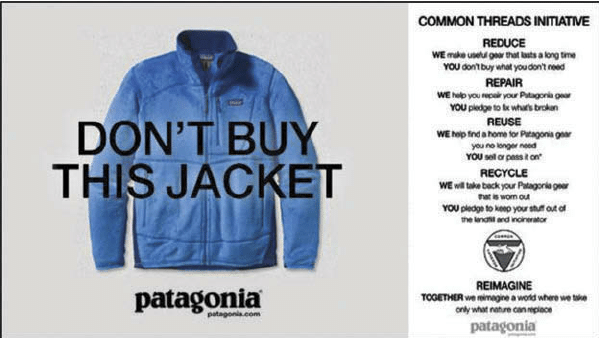
This is shown within Patagonia, a global outdoor clothing retailer shows a positive branding campaign as it helps them shape a positive self perception and positive personality of their brand. This is made evident as Patagonia are hugely recognised for it’s environmental practices that they have undertaken in making their products. For example, Patagonia not only encourages consumers to purchase environmental friendly products but to also recycle them and consume less, which is showed through their media campaign of “don’t buy this jack”. Which is where the message was intended to encourage people to consider the effect of consumerism on the environment and purchase only what they need. Basically Patagonia was saying “we don’t want your cash ” by asking people to buy only what they need, repair what breaks, and re-use or recycle everything else. So if your purchasing their products and it’s going to be detrimental to the environment And just go to the landfill Patagonia are basically saying do not purchase their product then.

Moreover, as evident in the video above Patagonia can be shown to use the environment to gain a positive self image and self perception within their consumers and community as they aim to benefit the society and environment at large not only for this generation but to the future generations. This is shown in the above video as Patagonia suggested that consumers should reflect upon their actual needs before purchasing a product, a message discouraging consumption and encouraging more conscious and responsible buying habits.

Which enabled Patagonia to gain the personality of a company that is conscious about the environment and aims to better not only consumers but also the society and environment in which we live in, which has also contributed to their positive self image as they can be seen as a leader in sustainable movement. This has lead to Patagonia gaining a positive self image, self perception, self comparison and personality amongst their consumers.

Reference:

(1) Emeraldinsight.com. (2019). “Don’t buy this jacket”, Consumer reaction toward anti-consumption apparel advertisement, Journal of Fashion Marketing and Management: An International Journal, Accessed 18 April 2019, https://www.emeraldinsight.com/doi/full/10.1108/JFMM-12-2014-0087?fullSc=1

(2) YouTube. (2019). ‘Patagonia: The Paradox of an Eco-Conscious Company’. Accessed 18 April 2019, https://www.youtube.com/watch?v=FaK3koLyChE

(3) Mehta, A., 1999. ‘Using self-concept to assess advertising effectiveness’. Journal of Advertising Research39(1), pp.81-81. http://gandrllc.com/reprints/usingselfconcepttoassessadvertisingeffectiveness.pdf

(4) Moschis, G.P., 1976. Social comparison and informal group influence. Journal of Marketing Research13(3), pp.237-244. https://www.jstor.org/stable/3150733?seq=1#page_scan_tab_contents

How Perception has aided Patagonia in becoming fashions favourite outdoor brand

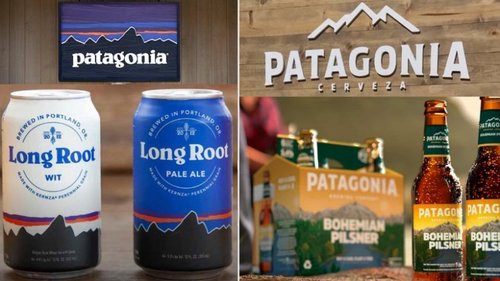
Patagonia is one of the most used outdoor clothing brands not only in Australia but around the world. Patagonia, founded in 1973 by Yvon Chouinard has brought the company from a small start up business focusing on rock climbing equipment to million dollar company selling not only outdoor equipment but also selling it’s own craft beer!!! (1) Such drive and motivation by the company has allowed it to compete against it’s much larger competitors such as north face and Kathmandu. (1) How have they done so you may ask? or even better how could a small brand selling outdoor equipment manage to produce it’s own craft beer??

Well to figure that out you need to look at the company’s long standing environmental advocacy which has enabled them to become a benchmark for their eco-friendly products. Thus, in doing so, Patagonia has created a long standing vision, not only to their company’s goals and mission statement but has also created the perception within their customers minds as they know that they will get an eco friendly product all the time no matter the place or circumstance whilst using vibrant colours to demonstrate this as they use recycled nylon and other recycled fabrics to create their products.

How Patagonia has used vision within sensory marketing to create an effective and efficient company and product perception?

In this day and age of products and how companies undertake their production process, there is a large focus on them to be environmentally sustainable as they have a job to preserve the environment for this generation and future generations. So when customers shop or look for products they generally look for companies with a good geo footprint or one that has a high environmentally friendly rating. As shown Patagonia has successfully done this is through sensory marketing referring to focusing and engaging on the customers senses of vision to influence their perception and judgement.

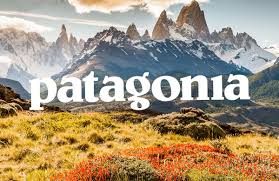
Patagonia straight away create this perception by appealing to their niche market through the mountains and carefully planned choice of colours within their logo. So, as Patagonia has been marketed for over 30 years it’s easy to see why they have this perception of an eco-friendly outdoor brand as their colour choice over the mountains replicates that of the different colours of the sky you see (light blue, orange, dark blue and purple) whilst exploring the outdoors, giving the customers a vision of a vintage vibe, giving a sense of a chilled and peace vibe contrasted with orange encourages customers to go out and explore the peaceful nature of the outdoors.

Thus, it gives out subconscious triggers which appeals to their consumers senses which efficiently engages it’s consumers (Krishna 2012). It also senses to customers that because of this they also would be environmentally sustainable because of the care they have for the outdoors. So I guess it’s easy to say why would a company that mainly relies on the outdoors want to destroy the outdoors?

So through vision, Patagonia have used a song personal selection known as perceptual vigilance which refers to customers becoming more aware of Patagonia’s product when they need it. For example, if an individual is going on a hike to Mount Everest, they become more aware of Patagonia because it suits and caters for there current needs. Thus, Patagonia has done this to attract and attain customer not only for the short term but also for the long term.

This Is evident within myself as I recently went on a trek to Mount Everest and only became aware of Patagonia because it catered for my trekking needs, as I needed warm but assurable clothes that would suit me for all conditions I faced such as rain, snow, wind etc. Hence, it creates perception by appealing to our senses of colour as stated above is done through the logo, which then creates a vision through perceptual vigilance that Patagonia are the business you want to go to when going to explore the outdoors. Which creates the perception that Patagonia are a leading environmentally sustainable company, who’s products are durable and ‘trendy’ in which care for the outdoors.

For example, (Singh, 2006) study argues that “consumer behaviour and brand perception are largely influenced by colours” and found “that the colours affect not only the person, but also the relationship”. Thus sensory marketing evokes the emotions affecting consumers perceptions of the product or brand. As a result both Singh (2006) and Krishna (2012) highlights the benefits of “using sensory marketing for building brand value, including ensuring loyalty of standing customers as well as gaining new ones, building a successful brand and positive perception of the brand and product by users”.

In addition I can say it has been a successful approach because as for myself their hiking and trekking gear kept me warm and dry, whilst also not being damaged so I can use it for other hikes and trikes thus they have gained a long lasting customer within myself and if it has done that to me others will also have the same experience, thus proving to be effective and efficient. Therefore, by looking at the study and my own experience it is evident that Patagonia’s brand perception is the driving force one why they have become so successful.

(1) Nast, C 2019. This Is the Outdoor Brand Fashion Insiders Can’t Get Enough Of. GQ. Visited 3 Apr. 2019 https://www.gq.com/story/patagonia-labels-on-fire

(2) Saad, M 2019. ‘Patagonia: A Focus on a Sustainable Model – Technology and Operations Management. Rctom.hbs.org. Visited 3 Apr. 2019, https://rctom.hbs.org/submission/patagonia-a-focus-on-a-sustainable-model/

(3) Krishna, A., 2012. ‘An integrative review of sensory marketing: Engaging the senses to affect perception, judgment and behavior’. Journal of consumer psychology22(3), pp.332-351. http://neuromarkewiki.com/images/1/13/An_integrative_krishna_2012.pdf

(4) Nadanyiova, M., Kliestikova, J. and Kolencik, J., 2018. Sensory Marketing from the Perspective of a Support Tool for Building Brand Value. Economics and Culture15(1), pp.96-104. https://content.sciendo.com/view/journals/jec/15/1/article-p96.xml

(5) Singh, S 2006 . ‘Impact of Color on M arketing. In Management: Decision’, (44), 783 – 789.